

Hi there! How can we help you today?
Solar Energy and Capacity Building for Rural Maternity Health Centres in Kibaale District, Uganda (SolarMCH)
-
Home
-
Solar Energy and Capacity Building for Rural Maternity Health Centres in Kibaale District, Uganda (SolarMCH)

Solar Energy and Capacity Building for Rural Maternity Health Centres in Kibaale District, Uganda (SolarMCH)
Project Overview
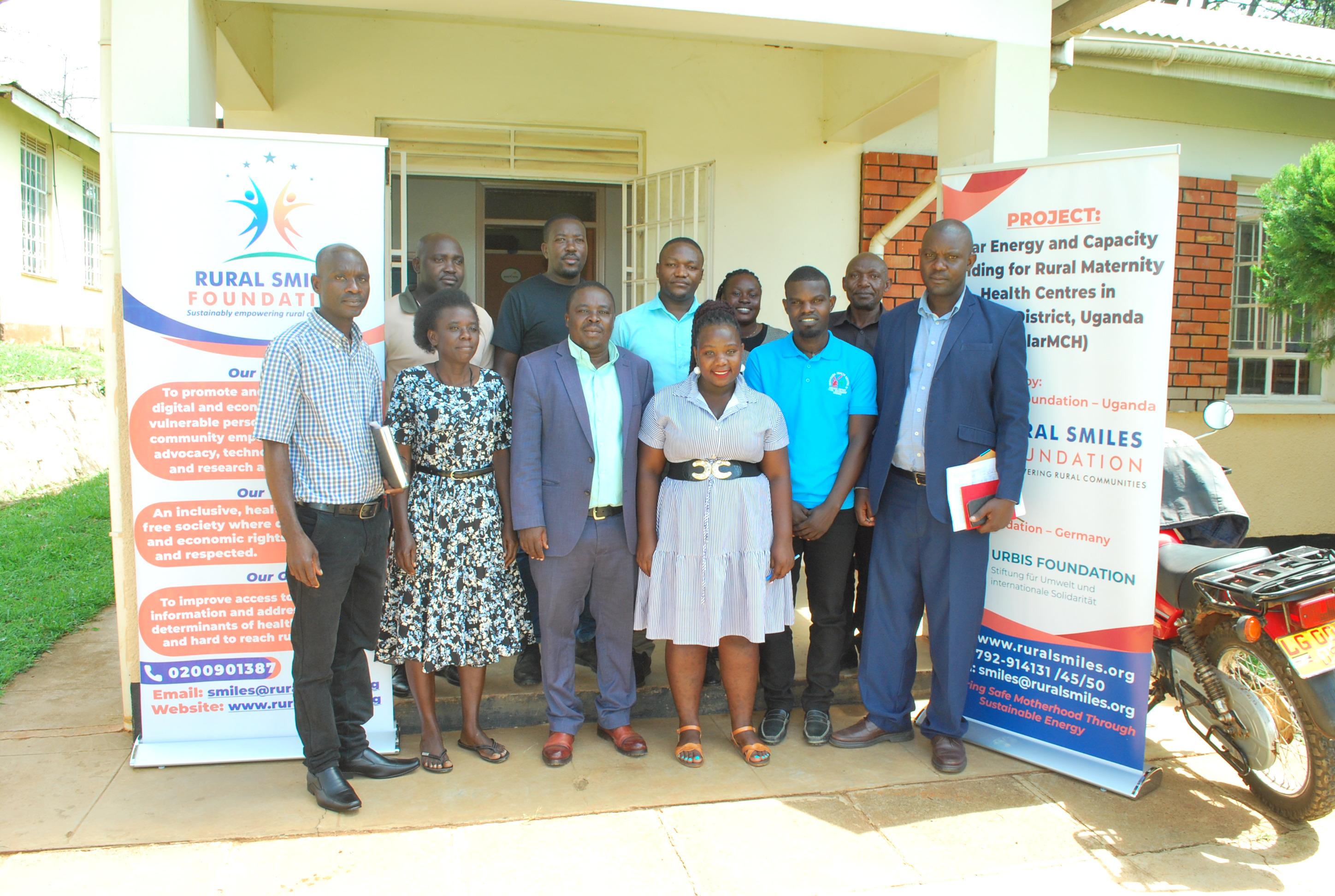
The SolarMCH Project is a three-year initiative (2026–2028) implemented by Rural Smiles Foundation with support from the URBIS Foundation (Germany). The project focuses on strengthening maternal healthcare services in rural Kibaale District by providing reliable solar energy solutions and building local technical capacity for long-term sustainability.
By addressing energy gaps in rural health facilities, the project contributes to safer childbirth conditions, improved vaccine storage, and more resilient healthcare systems.
Background and Rationale
Many rural health centres in Kibaale District experience unreliable electricity, affecting maternal healthcare delivery, vaccine cold-chain systems, and emergency response capacity. Power interruptions can compromise safe deliveries, especially at night, and increase operational costs through reliance on diesel generators.
The SolarMCH project was developed in close consultation with district leadership and health facility teams to address these challenges through sustainable renewable energy solutions combined with technical training.
Project Goal
To strengthen maternal and neonatal healthcare services in rural Kibaale District through reliable solar energy systems and sustainable local capacity building.
Key Objectives
Install standardized solar photovoltaic (PV) systems in four rural maternity health centres:
Mugarama Health Centre III
Bubango Health Centre II
Nyamarwa Health Centre II
Kyebando Health Centre III
Improve vaccine storage capacity through solar direct-drive refrigerators
Build local technical expertise through solar maintenance training
Reduce reliance on diesel generators and unreliable grid electricity
Promote sustainable energy adoption in rural healthcare systems
Project Components
1. Solar Infrastructure Installation
The project will install high-quality solar PV systems designed to support maternity ward operations, lighting, medical equipment, and vaccine refrigeration.
Key features include:
Solar PV panels with battery storage
Certified inverters and charge controllers
Remote monitoring systems for performance tracking
Solar direct-drive vaccine refrigerators
2. Capacity Building and Training
A strong sustainability component includes:
Training three Trainers of Trainers (ToT) in solar photovoltaic installation and maintenance
Training 20 health facility staff in basic system operation and troubleshooting
Development of local maintenance capacity
Ongoing refresher training support
This ensures that technical knowledge remains within the community.
3. Community and Stakeholder Engagement
The project emphasizes partnership with:
Kibaale District Local Government
District Health Office (DHO)
Health facility leadership
Community stakeholders
Regular engagement helps foster ownership, accountability, and sustainability.
Expected Impact
Healthcare Outcomes
Improved safety of maternal and neonatal services
Reliable lighting for deliveries and emergencies
Strengthened vaccine cold-chain systems
Enhanced health facility operational efficiency
Environmental Outcomes
Reduced diesel generator use
Lower carbon emissions
Increased renewable energy adoption
Institutional Outcomes
Strengthened technical capacity within local health systems
Improved sustainability of health infrastructure
Enhanced collaboration between NGOs, government, and communities
Sustainability Strategy
Long-term sustainability is supported through:
Technical training of local trainers and health workers
Integration with district health planning structures
Remote system monitoring
Maintenance planning and spare parts access
Continued partnership with local authorities
Budget Overview
Total Project Budget: €35,384.29
(Approximately UGX 149,427,856)
Budget Allocation:
60% – Solar infrastructure investment
15% – Installation, maintenance, and training
20% – Operational implementation costs
5% – Project coordination support
The budget prioritizes infrastructure and sustainability while keeping administrative costs minimal.
Partners and Support
Project Funder:
URBIS Foundation (Germany)
Implementing Organization:
Rural Smiles Foundation (Uganda)
Local Partners:
Kibaale District Local Government
District Health Office
Health facility teams
Community stakeholders
Project Timeline
2026 – Preparation and Capacity Building
Technical training of Trainers of Trainers
Procurement planning
Stakeholder engagement
2027 – Installation Phase
Solar system installation
Equipment deployment
Community sensitization
2028 – Monitoring and Sustainability
System performance monitoring
Refresher training
Final evaluation and reporting
Why This Project Matters
Reliable energy is essential for safe maternal healthcare. By combining renewable energy infrastructure with local technical capacity building, the SolarMCH project strengthens rural health systems while promoting sustainability and environmental responsibility.
This initiative reflects the shared commitment of partners, district leadership, and communities to improving healthcare access and resilience in rural Uganda.
Share this service: