



Hi there! How can we help you today?
SPACEUG Releases Its First Quarterly Threat Monitoring Report Highlighting Growing Civic Space Concerns Across East Africa
-
Home
-
Solidarity
-
SPACEUG Releases Its First Quarterly Threat Monitoring Report Highlighting Growing Civic Space Concerns Across East Africa

SPACEUG Releases Its First Quarterly Threat Monitoring Report Highlighting Growing Civic Space Concerns Across East Africa
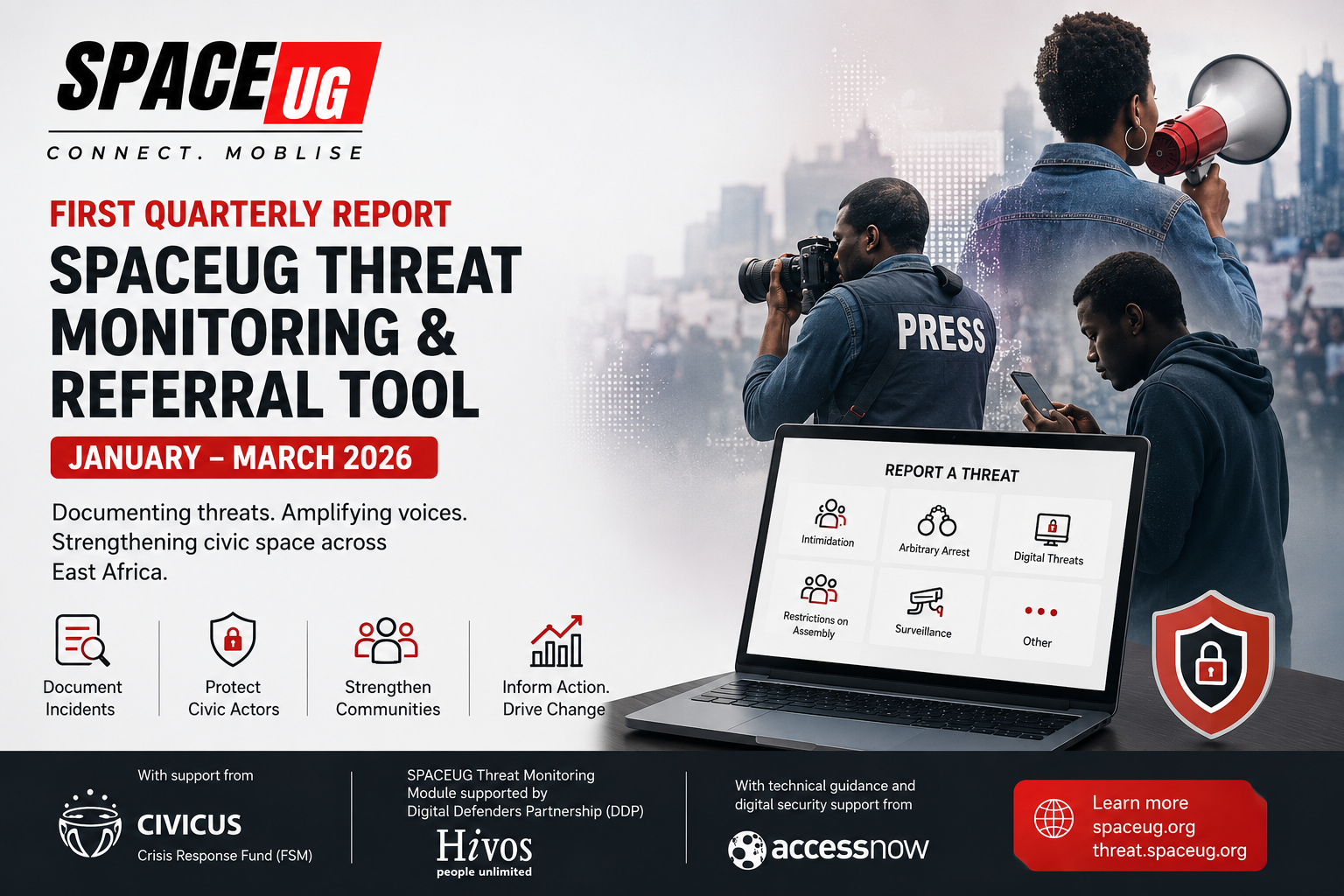
The Rural Smiles Foundation is pleased to release the first quarterly report for the SPACEUG Threat Monitoring & Referral Tool, covering the period January to March 2026. This milestone report marks an important step in the growth of SPACEUG as an emerging regional civic space monitoring and early warning platform supporting activists, journalists, human rights defenders, youth leaders, community organizers, and civil society actors across East Africa.
As the first report produced under the platform, it serves as a baseline for future monitoring and reporting, providing early insights into the nature of civic space threats affecting communities across the region while also demonstrating the growing relevance of community-driven digital monitoring systems.
Understanding the SPACEUG Threat Monitoring Tool
The SPACEUG Threat Monitoring & Referral Tool was developed to provide a secure and accessible mechanism for documenting threats and incidents affecting civic participation and democratic engagement. The platform allows individuals and organizations to submit reports related but not limited to:
- intimidation and harassment,
- arbitrary arrests and detentions,
- digital surveillance,
- online harassment,
- restrictions on peaceful assembly,
- threats against journalists and activists,
- and other civic space violations.
The tool also supports multilingual reporting, enabling users to submit reports in English, Swahili, and local languages, making it more accessible to grassroots communities and local civic actors.
Since its launch, the platform has steadily evolved into a regional digital civic infrastructure supporting safer reporting, documentation, and collaboration.
Key Findings From the First Quarterly Report
During the reporting period, the SPACEUG platform documented incidents from multiple East African countries including:
- Uganda,
- Kenya,
- Tanzania,
- Rwanda,
- Burundi,
- South Sudan
The report highlights several emerging patterns affecting civic space across the region.
Growing Intimidation of Civic Actors
A significant number of documented incidents involved intimidation targeting:
- youth activists,
- journalists,
- community mobilizers,
- and civil society actors organizing governance discussions or community engagement activities.
Many reports described individuals receiving threats after participating in discussions related to accountability, leadership, or civic participation.
Increasing Digital Threats and Surveillance
The report also documented growing concerns around digital security, including:
- suspicious login attempts,
- online harassment,
- internet shut down,
- phishing attempts,
- and intimidation through social media platforms.
These incidents particularly affected journalists, bloggers, and digitally active civic actors.
Restrictions on Civic Participation
Several reports highlighted disruptions of community meetings and growing restrictions affecting peaceful assembly and civic engagement activities. In some instances, organizers reported being questioned about meetings discussing governance and public accountability.
Expansion Beyond Uganda
While SPACEUG initially focused on Uganda, the reporting period demonstrated increasing regional engagement with reports emerging from neighboring countries across East Africa. This reflects growing demand for accessible and trusted civic space monitoring systems within the region.
Why This Report Matters
The release of the first SPACEUG quarterly report is important for several reasons.
First, it demonstrates the value of grassroots and community-led reporting systems in documenting realities that are often underreported. Many incidents affecting local activists, journalists, and community leaders rarely receive broader visibility despite their impact on democratic participation and civic freedoms.
Second, the report contributes to early warning and evidence-building efforts that can help strengthen civic protection responses, digital safety interventions, and advocacy for safer civic environments.
Third, the report reflects the increasing role of technology and digital platforms in supporting civic resilience and community participation across Africa.
Building an Inclusive Reporting Ecosystem
One of the most notable developments during the reporting period was the increasing use of multilingual reporting through the platform. Reports were submitted not only in English, but also in Swahili and local languages spoken within communities.
This approach helps:
- improve accessibility,
- strengthen trust,
- and encourage participation from grassroots users who may not normally engage with formal reporting systems.
The platform continues working toward creating an inclusive digital environment where civic actors from both urban and rural communities can safely document incidents affecting their work and participation.
Acknowledging Partners and Supporters
The Rural Smiles Foundation acknowledges the support of CIVICUS through the Crisis Response Fund under the Flexible Support Mechanism (FSM), which supported the development of the broader SPACEUG platform and contributed to strengthening regional civic space resilience and digital civic infrastructure.
We further acknowledge the support of Hivos through the Digital Defenders Partnership (DDP), which specifically supported the development and strengthening of the SPACEUG Threat Monitoring Module, including secure incident reporting, digital safety, and threat documentation mechanisms.
We also acknowledge the technical guidance and digital security support provided by the Access Now Digital Security Helpline and Incident Response Team, whose expertise contributed to strengthening digital resilience and platform security considerations.
SPACEUG Threat Monitoring Report – Q1 2026
Download our first quarterly report covering civic space threat monitoring from January to March 2026.
Download ReportShare this post:
Related Posts

Solidarity 16 Days of Activism to End Gender-Based Violence
we stand united with survivors, communities, and human rights defenders to end all forms of violence...